The Ultimate Guide to Boutonnieres: Styles, Placement, and Etiquette
There's a photograph from nearly every wedding—a quiet moment before ceremony chaos, when steady hands pin a boutonniere to a groom's lapel. Perhaps it's his father completing this small ritual, or his best friend steadying nervous fingers, or the bride herself in that charged instant before they separate to their respective sides of the threshold. The boutonniere is often the smallest floral element in any wedding, yet in this gesture of pinning it in place, something ancient and tender happens: a blessing, an acknowledgment, a visible symbol that today is unlike any other.
The boutonniere has graced men's formal wear for centuries, its origins woven through military tradition, romantic gesture, and the simple human desire to mark significant moments with living beauty. Today, when so much of wedding planning becomes overwhelming in its scope and complexity, the boutonniere remains refreshingly straightforward—a single stem or small cluster that says everything it needs to without shouting.
But straightforward doesn't mean simple. Behind that lapel flower lies a world of choice: which blooms speak to your aesthetic, how they coordinate with the bride's vision, where exactly they should be positioned, and what the various traditions and modern interpretations suggest about style and meaning. This is your complete guide to boutonnieres—not as afterthought accessories, but as thoughtfully chosen elements that complete your wedding day vision with quiet, masculine elegance.
A Brief History of Lapel Flowers
Understanding where boutonnieres come from deepens appreciation for why they matter. The word itself comes from French, literally meaning "buttonhole"—a reference to the jacket lapel's buttonhole where flowers were traditionally secured. But the practice of men wearing flowers reaches back much further, intertwining with military decoration, medieval romance, and Victorian language of flowers.
Knights returning from battle would wear their ladies' favors—often flowers or ribbons—as visible tokens of devotion and loyalty. This romantic tradition evolved through centuries, with flowers becoming standard elements of formal masculine dress during the Victorian era, when even the smallest details carried symbolic weight and social meaning.
In that language-of-flowers tradition, boutonniere selection communicated volumes. A red rose declared passionate love, while white roses spoke to purity and virtue. Carnations indicated admiration, and specific colors refined the message further. While contemporary couples rarely consult Victorian flower dictionaries when choosing boutonnieres, this heritage of meaningful selection persists in how we instinctively want grooms' flowers to "mean something"—to connect visually and emotionally to the larger celebration.
The boutonniere's endurance through changing fashion speaks to its essential rightness. Even as formal wear evolves and wedding traditions shift, this small floral accent remains constant—a detail that elevates ordinary suits to ceremonial dress, that photographs beautifully, and that creates visual continuity between the groom and the floral elements adorning his bride.
Designing with Intention: Styles and Materials
Modern boutonnieres range from minimalist single stems to elaborate miniature arrangements, from fresh blooms to carefully crafted silk flowers that last forever. Understanding the spectrum of possibilities helps you choose or commission pieces that align with your wedding's aesthetic while honoring the groom's personal style and comfort.
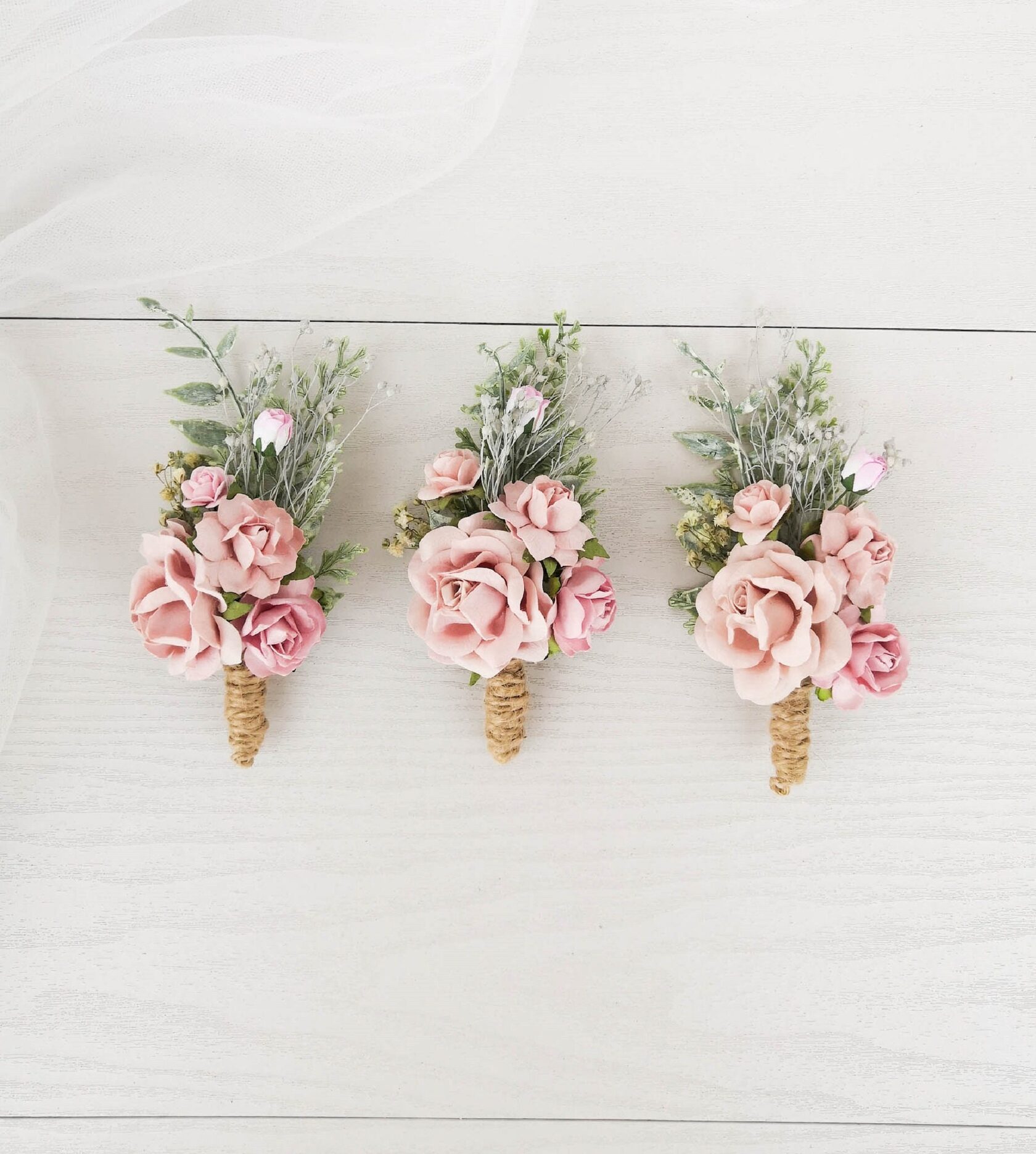
The classic single-bloom boutonniere maintains timeless appeal. One perfect rose, a single calla lily, a garden rose in full bloom—these straightforward choices photograph beautifully and work across nearly every wedding style. They're especially appropriate for very formal weddings or grooms who prefer understated elegance over embellishment. When Anna creates single-bloom boutonnieres at FaberAccessories, she selects premium silk flowers with botanical accuracy and natural color variation, ensuring even simple pieces possess dimensional beauty and realistic presence.
Clustered boutonnieres incorporate multiple blooms or mix flowers with textural elements like dried grasses, eucalyptus, berries, or seed pods. These pieces suit garden weddings, bohemian celebrations, or any aesthetic that embraces organic abundance. The clustering creates visual interest and allows color play—perhaps a dusty rose bloom paired with burgundy hypericum berries and sage eucalyptus, creating depth and narrative within the small composition.
Textural boutonnieres emphasize interesting materials over traditional flowers. Think preserved wheat bundled with dried lavender, sculptural succulents paired with air plants, or architectural elements like protea or thistle. These pieces appeal to grooms with modern or artistic sensibilities and work beautifully for unconventional venues or celebrations that eschew traditional romantic florals in favor of structural drama.
For truly unique pieces, consider incorporating meaningful elements beyond flowers. Vintage brooches or pins from family members, small charms, feathers, or even non-botanical materials that reflect the groom's interests—a small fishing fly for an angler, a bit of sheet music for a musician. These personal touches transform boutonnieres from decorative accessories into storytelling elements.
The choice between fresh and silk flowers deserves thoughtful consideration. Fresh blooms offer undeniable organic beauty and fragrance, but they wilt, bruise, and require careful timing and handling. Premium silk flowers like those FaberAccessories uses provide lasting beauty without fragility concerns—grooms can pin them on hours before ceremony without worrying about wilting, and the pieces become keepsakes rather than compost. For outdoor weddings, destination celebrations, or simply couples who want to preserve every element, silk boutonnieres offer practical and emotional advantages.
Color Theory and Visual Harmony
Boutonniere color selection might seem like minor detail, but these small floral accents function as visual punctuation—drawing the eye, creating cohesion, and either harmonizing with or intentionally contrasting against surrounding colors. Approaching this choice with intention ensures your boutonnieres enhance rather than clash with the overall aesthetic.
The traditional approach matches boutonniere flowers to the bridal bouquet, creating direct visual connection between groom and bride. This coordination works beautifully for couples who want obvious unity—if the bride carries garden roses in blush and ivory, the groom wears a single blush rose. This approach photographs cohesively and appeals to those who appreciate symmetry and traditional romantic symbolism.
However, matching isn't the only—or necessarily the best—option. Consider coordinating rather than matching: pulling accent colors from the bride's flowers rather than duplicating the dominant blooms. If her handmade flower crown features ivory roses with dusty sage eucalyptus and burgundy hypericum, his boutonniere might emphasize the burgundy with a single deep red bloom accented by eucalyptus. This creates conversation between pieces without identical replication.
Suit color dramatically impacts boutonniere selection. Against classic black or navy, nearly any flower color works beautifully—the dark backdrop makes even pale blooms pop visually. Lighter suits require more consideration: blush flowers against tan suits can read as washed out, while deeper jewel tones create necessary contrast. Gray suits offer wonderful versatility, complementing both soft pastels and dramatic deep colors.
For grooms wearing unconventional suit colors—burgundy, forest green, dusty blue—boutonniere selection becomes particularly important. The goal is either harmonious coordination that creates monochromatic sophistication or strategic contrast that makes the boutonniere a focal point. A burgundy suit pairs gorgeously with ivory or blush flowers for soft contrast, or with even deeper burgundy blooms and dried elements for tonal richness.
Don't forget about the wedding party. Groomsmen's boutonnieres should coordinate with the groom's while remaining slightly less elaborate or prominent—he's the main character, after all. Perhaps groomsmen wear smaller versions of his boutonniere, or complementary flowers in similar palettes. Fathers and grandfathers might wear even simpler pieces—single stems or small clusters that participate in the color story without competing for attention.
The Art of Proper Placement
Even the most beautifully crafted boutonniere fails if positioned incorrectly. Proper placement isn't just about aesthetics—it's about ensuring the piece stays secure, photographs well, and doesn't interfere with natural movement or create awkward visual imbalance.
The traditional placement positions the boutonniere on the left lapel, above the heart. This location has historical resonance—wearing flowers over the heart suggests romance and devotion—and practical advantages. It's where jacket construction naturally accommodates pinning, where the lapel buttonhole exists on most formal wear, and where the boutonniere remains visible in standard portrait photography without being obscured by the groom's right arm when he stands naturally.
Specifically, position the boutonniere just below the lapel notch—the point where the collar meets the lapel—angled slightly downward to follow the lapel's line. This placement appears intentional and elegant rather than haphazard. The stem should tuck behind the lapel while the bloom faces forward, creating clean lines without visible mechanics.
Pinning technique matters tremendously. Use a boutonniere pin (longer and sturdier than standard straight pins) inserted from behind the lapel, through the boutonniere stem, back through the jacket fabric, and secured with the pin clasp. Some prefer the pin to enter through the buttonhole when one exists, though this isn't strictly necessary. The goal is security without visible hardware—the bloom should appear to naturally emerge from the lapel rather than obviously being pinned on.
For jackets without traditional lapels—Mandarin collars, shawl collars, or casual blazers—placement becomes more creative. A boutonniere can be pinned to the chest pocket area, though this requires extra care to ensure security. Alternatively, consider pocket squares with attached boutonnieres, or small floral clips that grip fabric without piercing. Anna can adapt FaberAccessories boutonniere construction to accommodate non-traditional jacket styles, adjusting attachment methods while maintaining aesthetic integrity.
Test placement before the wedding day. During suit fittings, bring or simulate your boutonniere to confirm positioning works with your specific jacket. Different suit constructions place lapels at varying heights and angles—what works perfectly on one style might appear awkward on another. This advance testing prevents day-of scrambling and ensures confident, correct placement.
Modern Etiquette and Who Wears What
Wedding etiquette around boutonnieres has evolved from rigid rules to flexible guidelines, allowing couples to honor tradition while adapting to their specific family dynamics and celebration style. Understanding the contemporary approach helps you make thoughtful decisions about who wears boutonnieres and how those pieces should relate to each other.
The groom always wears a boutonniere—this is the one non-negotiable. His boutonniere should be the most prominent or distinctive, clearly identifying him as the day's central figure. Whether through size, bloom choice, color intensity, or unique elements, his piece should stand apart from others.
The best man and groomsmen traditionally wear boutonnieres, creating visual unity within the wedding party. These can match the groom's style in a simplified form, or incorporate different but coordinating flowers. If the groom wears a clustered silk flower boutonniere with roses and eucalyptus, groomsmen might wear single roses with small eucalyptus accents. This hierarchy respects tradition while maintaining cohesion.
Fathers—both the groom's father and the bride's father—typically wear boutonnieres. These often coordinate with but differ from the groomsmen's pieces, perhaps incorporating different flowers or simpler arrangements. This acknowledges their special role while distinguishing them from the younger wedding party. Some couples choose to have fathers' boutonnieres match the mothers' corsages, creating parental pairs that photograph beautifully.
Grandfathers, officiants, and other honored male participants can wear boutonnieres, though this isn't required. Use these accessories to visually identify individuals with special roles—if your uncle is doing a reading, a boutonniere distinguishes him from regular guests. However, don't feel obligated to provide boutonnieres to every male guest. The pieces should denote significance, not simply mark gender.
Ushers present interesting consideration. If ushers are also groomsmen, they wear the standard groomsmen boutonnieres. If they're separate individuals—perhaps younger brothers or family friends—decide whether their role warrants boutonniere distinction or if their participation is adequately honored without additional accessories.
For LGBTQ+ weddings, boutonniere etiquette adapts beautifully to your specific dynamic. Two grooms might wear complementary but distinct boutonnieres. In weddings mixing traditionally masculine and feminine elements, anyone wearing a jacket with lapel can sport a boutonniere regardless of gender presentation. The key is ensuring focal participants—the couple getting married—have the most distinctive pieces, with others coordinating in supporting roles.
Timing, Handling, and Practical Considerations
Even perfectly designed boutonnieres can disappoint if practical elements aren't managed thoughtfully. Understanding timing, handling, and day-of logistics ensures these small accessories contribute to your celebration's smoothness rather than creating unexpected stress.
If choosing fresh flowers, timing becomes critical. Boutonnieres should be pinned on as close to ceremony as possible—ideally within an hour. Earlier pinning risks wilting, especially in warm weather or if grooms are moving between outdoor and indoor spaces. Coordinate with your florist about delivery timing and keep boutonnieres refrigerated until needed.
Silk boutonnieres eliminate these timing concerns entirely. They can be pinned on hours before ceremony, allowing relaxed getting-ready photos without rushing or worrying about wilting. This practical advantage particularly benefits destination weddings, outdoor summer celebrations, or simply grooms who want one less thing to stress about on an already busy day.
Designate someone responsible for boutonniere pinning. This person should practice beforehand—pinning boutonniere correctly takes slight technique, and fumbling through the process while everyone waits isn't ideal. Often the best man handles pinning for the groom, fathers pin each other, and someone (perhaps the groom's mother or wedding coordinator) oversees ensuring everyone's boutonnieres are properly positioned.
Consider physical comfort. Boutonnieres shouldn't be so heavy they pull fabric or create visible weight. They shouldn't position so high they catch on faces during natural movement. And the pin shouldn't pierce through to skin—this sounds obvious, but nervous, hasty pinning sometimes results in actual pin pricks. Quality construction and mindful pinning prevent these issues.
For outdoor or active weddings, test durability. If your celebration involves hiking to a ceremony site, dancing vigorously, or other physical activity, ensure boutonniere construction can withstand movement. FaberAccessories creates pieces with secure attachment and durable materials, but communication about your wedding's activity level helps Anna design appropriately sturdy pieces.
Plan for boutonniere preservation if desired. Fresh boutonnieres can be pressed or professionally preserved, though this requires immediate action after the wedding. Silk boutonnieres simply need careful storage—perhaps in a shadow box alongside the bride's preserved bridal hair accessory or displayed on a boutonniere stand as memento. This preservation transforms accessories into lasting keepsakes that maintain connection to your wedding day.
Coordination with the Bride's Accessories
Boutonnieres don't exist in isolation—they're one element in the comprehensive visual story your wedding tells. Understanding how they relate to the bride's accessories, particularly her handmade flower crown, bridal hair accessory, or bouquet, creates cohesion that elevates the overall aesthetic.
The most harmonious approach considers boutonniere design alongside bridal accessory selection. If the bride will wear a silk flower headpiece featuring garden roses, eucalyptus, and dusty miller, the groom's boutonniere might incorporate a single garden rose with eucalyptus accent. This creates visual echo without redundancy—his simpler piece complements her more elaborate accessory.
Pay attention to style consistency. A bride wearing a delicate, minimalist bridal hair accessory with barely-there floral accents pairs awkwardly with a groom sporting an elaborate, abundant boutonniere. Conversely, if she's wearing a dramatic wedding hair wreath with full blooms and trailing ribbons, his single understated stem might appear disconnected from the overall aesthetic. Match the energy and elaboration level between pieces.
Color provides another coordination opportunity. If the bride's handmade flower crown features a specific unusual shade—perhaps mauve roses or champagne spray roses—incorporating that same shade in the groom's boutonniere creates sophisticated color thread running through your accessories. These subtle connections photograph beautifully and demonstrate thoughtful planning.
Texture conversations matter too. If the bride's accessories incorporate dried elements like lavender or wheat, consider echoing those textures in the groom's boutonniere. If her pieces are entirely silk, his should probably be as well—mixing fresh and silk between bride and groom can photograph with confusing inconsistency unless done with very intentional styling purpose.
That said, coordination doesn't require identical materials or exact matching. A bride wearing fresh flowers with her gown while the groom wears a silk boutonniere works fine—the different timeframes and handling requirements for these pieces often make mixed approaches practical. The visual coordination comes from color, style, and overall aesthetic rather than material identity.
Beyond Tradition: Creative Alternatives
Not every groom connects with traditional boutonniere aesthetics, and not every wedding calls for conventional floral elements. Understanding alternatives ensures everyone can participate in visible wedding day adornment in ways that feel authentic and comfortable.
Pocket squares offer elegant alternative or complement to boutonnieres. A beautifully folded pocket square in wedding colors creates visual interest without floral elements. Some grooms wear both—boutonniere on lapel, coordinating pocket square—for layered elegance. FaberAccessories can create matching sets where boutonniere flowers coordinate with pocket square fabric colors.
Lapel pins provide another option. Vintage brooches, meaningful family pins, or custom-designed lapel pins reflecting shared interests (perhaps tiny mountains for adventurous couples, or book-shaped pins for literature lovers) personalize groom attire without flowers. These can be worn alone or incorporated into boutonniere design as complementary elements.
For ultra-casual or non-traditional weddings, consider abandoning boutonnieres entirely. If the groom is wearing jeans and a button-down rather than a suit, traditional boutonniere might feel incongruous. Trust your instincts about what fits your celebration's vibe rather than including elements out of obligation.
Some cultures have their own traditional alternatives to Western boutonnieres. Indian grooms might wear elaborate floral necklaces (varmala), while Hawaiian celebrations might include maile leaf lei instead of boutonniere. If you're incorporating cultural traditions, research whether your heritage includes alternative adornment that might feel more authentic than boutonniere.
Frequently Asked Questions
Can the groom wear a boutonniere without a jacket?
Absolutely, though placement requires creativity. For shirts without lapels, consider pinning to the chest pocket area or wearing as a pocket accent. Some grooms clip boutonniere to suspenders or waistcoat edges. The key is secure attachment that appears intentional rather than awkward. Discuss your specific outfit with Anna when ordering from FaberAccessories—she can adapt construction for non-traditional placement.
Should boutonnieres be stored in the refrigerator before wearing?
Only if they're fresh flowers. Silk boutonnieres require no refrigeration and actually benefit from avoiding cold and moisture. Keep them in their packaging in cool, dry space until needed. Fresh boutonnieres should stay refrigerated until about an hour before pinning, then allowed to reach room temperature before application to prevent shocking temperature changes.
What if the groom is allergic to certain flowers?
This is where silk boutonnieres excel—no pollen, no allergens, just beautiful floral form. If using fresh flowers, communicate allergies to your florist, who can suggest hypoallergenic alternatives. Many popular boutonniere flowers (roses, carnations, orchids) produce minimal pollen and rarely trigger allergies, but severe sensitivities warrant silk options.
How do we prevent boutonniere pins from damaging rental suits?
Use quality boutonniere pins designed specifically for this purpose—they're slightly thinner than standard straight pins and less likely to leave visible holes. Pin through the lapel's natural buttonhole when possible, or through areas where stitching already exists. Most rental companies expect minor pin holes and consider them normal wear. If deeply concerned, ask about pinless alternatives like magnetic boutonniere holders.
Can bridesmaids wear boutonnieres instead of carrying bouquets?
This unconventional approach can work for modern, non-traditional weddings. However, boutonnieres are traditionally masculine accessories, so consider whether this gender-play feels intentional and stylish or simply confusing. More common alternatives include bridesmaids wearing floral corsages, floral hair accessories, or carrying smaller, simpler bouquets than the bride's. Each approach creates different visual effect—choose what aligns with your overall aesthetic vision.
The boutonniere might be the smallest floral element in your wedding, but like all quiet details chosen with care, it carries weight beyond its size. It's the punctuation mark on formal attire, the visible symbol of this day's significance, the element that photographs in nearly every portrait and catches light in ways that add softness to masculine formality.
When you choose handmade boutonnieres from FaberAccessories, you're selecting pieces crafted with the same attention Anna brings to her handmade flower crowns and bridal hair accessories. Each boutonniere is designed as miniature work of art—silk flowers selected for botanical accuracy and natural beauty, dried elements incorporated for organic texture, construction ensuring security and comfort throughout your celebration.
These aren't afterthought accessories grabbed last-minute from a florist case. They're thoughtful additions to your wedding day vision, coordinating with the bride's pieces while honoring masculine aesthetic, permanent enough to preserve as keepsakes while beautiful enough to warrant that preservation.
Perhaps you've always known exactly what boutonniere you want—the specific bloom, the perfect color, how it will complement your suit and coordinate with your bride's crown. Or maybe you've barely considered these small lapel flowers, assuming they're simple details that don't warrant deep thought. Either way, you now understand that boutonnieres offer opportunity for meaning, for beauty, for one more element that says "This day is unlike any other."
Explore the FaberAccessories boutonniere collection, envision which handmade piece would complete your wedding day attire, and begin the conversation with Anna about creating custom boutonnieres that honor both tradition and your unique love story. Because even the smallest details deserve to be beautiful when they're marking the biggest moments of our lives.